

What a Premium Strength Training Gym Offers

You can tell within five minutes whether a gym is built for real training or for selling memberships. If you walk in and see people circling for racks, benches buried under bags, and half the room filming themselves, you are not in a premium strength training gym. You are in a crowded commercial facility pretending to serve everyone.
Serious training needs different conditions. It needs space, reliable equipment access, and an environment that respects focus. It also needs a system that helps you keep progressing without getting sidelined by poor exercise selection, bad setup, or avoidable overuse problems. That is the difference.
What defines a premium strength training gym
A premium strength training gym is not simply a gym with nicer finishes or a higher monthly rate. Price alone means nothing. The real standard is whether the facility helps committed people train hard, train consistently, and recover well enough to keep doing it.
That starts with access. If you have to rearrange your life around peak-hour traffic inside the gym, the setup is flawed. Busy professionals and disciplined lifters do not need more friction. They need a place where they can get in, train with intent, and leave without wasting 20 minutes waiting for basic equipment.
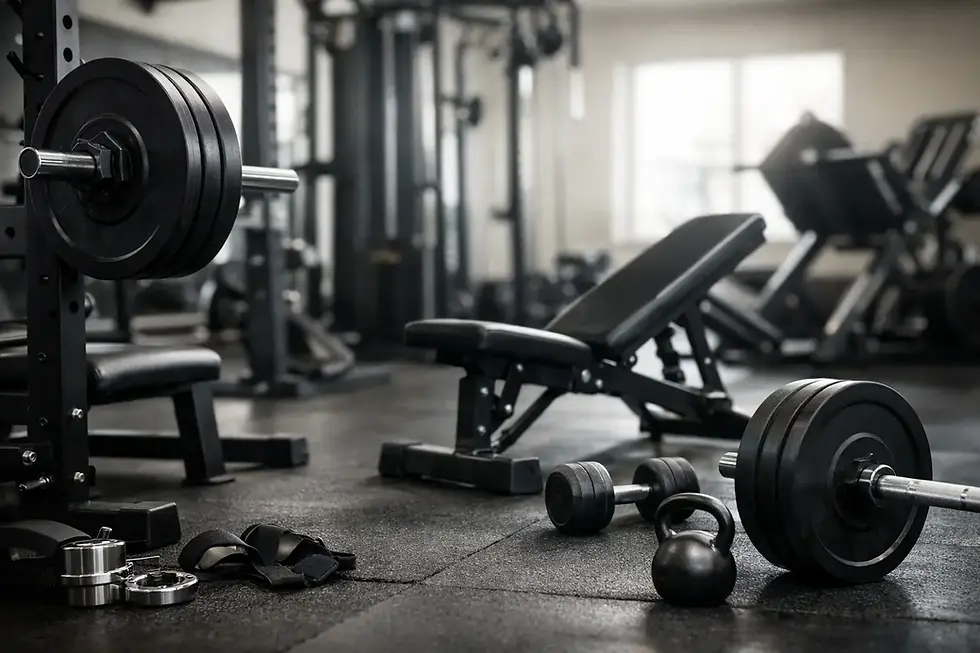
It also comes down to equipment quality and layout. In a serious strength environment, the essentials are not optional. Racks, benches, barbells, plates, cable stations, dumbbells, and recovery tools should be selected because they perform well, not because they look good in a sales tour. The space should make strong sessions easier, not force people to improvise around poor design.
Then there is the atmosphere. Premium does not mean loud. It does not mean flashy. It means controlled. The right environment removes distractions and lets members focus on the work. Less chaos leads to better sessions. Better sessions, repeated over time, produce results.
Why serious lifters leave commercial gyms
Most commercial gyms are optimized for volume, not training quality. They sell convenience at the front end, but the actual experience often creates friction every time you show up. Packed parking lots, crowded floors, limited racks, broken attachments, and constant interruptions wear people down.
That matters more than many gym owners admit. Strength progress depends on consistency, and consistency depends on having a repeatable system. If every session starts with hunting down equipment or rewriting your workout because the setup is unusable, your training quality drops. Some people tolerate that for a while. Serious people eventually stop accepting it.
There is also a recovery cost to bad environments. Not because crowded gyms are inherently dangerous, but because rushed lifting leads to sloppy decisions. People skip warm-ups, force exercises into cramped spaces, or substitute movements that do not fit their body just to keep things moving. Over time, those small compromises add up.
This is where a better gym earns its value. You are not paying for status. You are paying to remove obstacles that interfere with training outcomes.
Premium should mean smarter training, not just nicer equipment
A premium gym that only offers aesthetics is incomplete. Serious members need more than polished branding and expensive machines. They need a training philosophy.
The strongest facilities are built around performance and longevity at the same time. That means understanding how people move, how they load tissue over time, and how to train in a way that builds strength without creating unnecessary setbacks. Not every member needs physical therapy, but every member benefits from an environment shaped by that level of thinking.
That is a major difference between a standard gym and a facility with a physical therapy-informed foundation. In the second setting, training is not treated as random effort. Exercise selection, setup, progression, and recovery all matter. The goal is not to burn people out or impress them for one week. The goal is to keep them progressing for months and years.
There is nuance here. Hard training still needs to be hard. Premium does not mean easy, soft, or overcorrected. It means intelligent. Some lifters need more load. Some need cleaner execution. Some need better exercise choices because their current plan is beating them up. A serious gym should support all three.
The role of recovery in a premium strength environment
Recovery is often treated like an add-on. For committed lifters, it is part of the system. If your body is constantly stiff, irritated, or running on poor sleep and accumulated fatigue, your performance drops even if your motivation is high.
A premium facility should recognize that training and recovery are connected. That does not mean turning the gym into a spa. It means giving members tools, structure, and an environment that helps them sustain high-quality work. For some people, that is access to recovery modalities. For others, it is simply training in a calmer space where sessions are more focused and less draining.
The point is durability. Strength matters. Staying able to train matters just as much.
Who a premium strength training gym is actually for
Not everyone needs this kind of gym. That is fine.
If someone trains inconsistently, wants the cheapest option, or does not care whether their sessions are efficient, a premium model may not make sense. The value is highest for people who train regularly and notice the cost of poor conditions. If you lift three to five days per week, every wasted session adds up fast.
This model fits adults who take training seriously but also have real schedules. Professionals with limited time. Recreational athletes who want reliable strength work. Lifters who are tired of building their week around crowded hours. People who want privacy, quality, and a more controlled environment because they know those things directly affect results.
That audience is not looking for entertainment. They are looking for standards.
What to look for before you join
If you are evaluating a premium strength training gym, ignore the sales language for a moment and look at the operating reality.
Can you access the gym when you actually need it, or only when staffing allows? Do members have enough room and enough equipment to complete serious sessions without standing in line? Is the facility clean, organized, and clearly run with intention? Does the training environment feel focused, or does it feel like another overcrowded general-use club with a luxury price tag?
You should also look at the philosophy behind the facility. Is there any real expertise guiding how the space is built and how members train? Or is the premium label mostly decoration? This is where the difference becomes obvious. A gym shaped by performance and movement quality tends to make smarter decisions across the board, from layout to equipment mix to member experience.
In a market like Scottsdale, where there is no shortage of fitness options, the premium category can get blurry fast. Some places sell image. A smaller number deliver actual training conditions. The distinction matters.
Why fewer members can be a better deal
People often focus on monthly price without calculating the value of time and training quality. That is a mistake.
If a cheaper gym costs you 15 to 25 minutes of waiting, rerouting, and frustration several times per week, it is not really cheap. If the environment makes you dread peak hours or skip sessions entirely, it is costing you progress. For a consistent lifter, a more exclusive gym can be the better financial decision simply because it protects the thing you are paying for in the first place - productive training time.
That does not mean the most expensive option is automatically best. It means the right premium gym earns its price by improving execution, consistency, and long-term adherence.
The real value is not luxury. It is control.
The strongest case for a premium strength training gym is simple. Better conditions lead to better training. Better training, repeated consistently, leads to better results.
That is why serious facilities do not try to be everything to everyone. They narrow the focus. They protect the member experience. They create an environment where disciplined people can do what they came to do without distractions, delays, or unnecessary setbacks.
Kinetic Fitness fits that model because it is built for people who care about training quality, not gym traffic. A private atmosphere, 24/7 access, strong equipment, and a physical therapy-informed approach are not luxury extras. For the right member, they are the reason progress becomes more reliable.
If your current gym keeps getting in the way of your training, that is not a minor inconvenience. It is the problem. The right environment does not motivate you with noise. It gives your discipline somewhere better to work.


Comments